
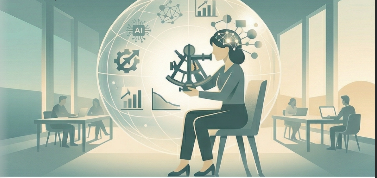
HR as Strategic Futurist: Elevating the Role from Service Function to Innovation Catalyst
Why must HR stop reacting and start anticipating?
I have said for years that the future is far more predictable than most leaders realize. The problem is not that the future is invisible. The problem is that most organizations train themselves to react to change after it has already disrupted performance, culture, and growth. That reactive habit is especially limiting for HR.
For too long, HR has been defined as a service function. It hires, trains, supports compliance, manages performance systems, and resolves people issues. Those responsibilities matter. But in an age of accelerating disruption, they are no longer enough. HR must become something more powerful: a strategic futurist function that helps the organization anticipate change before it arrives.
When HR develops that capability, its role shifts dramatically. It stops being viewed as administrative support and starts being recognized as a driver of innovation, transformation, and competitive advantage. That is not a cosmetic change in title. It is a fundamental change in value.
The organizations that thrive in the years ahead will be those that can identify talent disruptions, leadership gaps, skill shortages, workforce expectations, and cultural risks before those issues become expensive problems. HR is uniquely positioned to do exactly that.
What does it mean for HR to become a strategic futurist?
A strategic futurist does not predict everything. No one can. What a strategic futurist does is identify the future facts that will shape tomorrow’s workforce and use those facts to guide better decisions today.
For HR, this means moving beyond annual planning cycles and backward-looking reports. It means learning to distinguish between trends that will happen and trends that might happen. I call these Hard Trends and Soft Trends. Hard Trends are future certainties. Soft Trends are future possibilities that can still be influenced.
That distinction is a game changer for HR leaders.
Consider a few workforce-related Hard Trends. Digital transformation will continue. AI will keep reshaping work. Demographic change will keep altering labor supply. Employees will continue expecting more flexibility, personalization, and meaning from work. Skills will continue expiring faster than in the past. Those are not guesses. Those are directional certainties.
Now consider the Soft Trends. Whether your company will struggle to retain key talent is a Soft Trend. Whether managers will successfully lead hybrid teams is a Soft Trend. Whether your organization will build a culture that attracts next-generation talent is a Soft Trend. Those outcomes are not fixed. They can be changed.
That is where HR’s opportunity becomes enormous. The future of work is not something HR should merely adapt to. It is something HR can help shape.
Why is the old HR model no longer enough?
The traditional HR model was built for stability. It assumed job roles changed slowly, career paths were predictable, training happened in episodes, and culture was reinforced from the top down. That world no longer exists.
Today, business models shift quickly. Technology changes job requirements in months, not years. Entire functions are being augmented by automation. Employees are asking deeper questions about purpose, well-being, growth, and flexibility. Leadership itself is under pressure, because yesterday’s management habits often break under the speed of today’s change.
In that environment, HR cannot wait for the business to tell it what talent to find, what culture to support, or what skills to develop. By the time HR receives those requests, the organization is already behind.
A reactive HR function becomes a bottleneck. An anticipatory HR function becomes a catalyst.
That is the difference between filling roles and shaping capabilities. It is the difference between administering training and architecting future readiness. It is the difference between responding to burnout and designing work in ways that reduce it before it spreads.
The real opportunity is this: HR can become the function that helps the organization see disruption early and act on it with confidence.
How can HR identify the future before others do?
The first step is to stop overvaluing uncertainty. Many leaders say the future is impossible to know. That is simply not true. There is plenty we can know, especially when we focus on certainties instead of noise.
HR should begin with three questions.
#1 What demographic shifts are already underway? Aging workforces, multigenerational teams, lower birth rates in many regions, global talent mobility, and changing retirement patterns all affect workforce strategy. These are not abstract social trends. They directly influence succession, benefits, recruiting, and knowledge transfer.
#2 What technology shifts are already changing how work gets done? AI, automation, analytics, collaboration platforms, and intelligent systems are not side issues. They redefine jobs, productivity, learning, and leadership. HR should not treat these as IT topics. They are people topics.
#3 What workforce expectations have clearly changed? Employees want development that is continuous, not occasional. They want managers who coach, not just supervise. They want work experiences that feel human, not mechanical. They want trust, flexibility, transparency, and relevance. These expectations are shaping attraction and retention in real time.
When HR systematically studies those future facts, it gains foresight. And foresight allows action before urgency forces action.
How does anticipatory HR drive innovation?
Innovation is often treated as the responsibility of product, strategy, or R&D. That is a mistake. Innovation is ultimately a human capability. It depends on culture, leadership, learning, risk tolerance, collaboration, and speed of adaptation. All of those sit squarely within HR’s influence.
An anticipatory HR team drives innovation in at least four important ways.
#1 It identifies future skills before they become scarce. Instead of reacting to talent shortages, it builds pipelines early, redesigns learning, and develops internal mobility so the company can grow its own future-ready workforce.
#2 It helps leaders manage change better. Most change efforts fail because they focus on processes and systems while neglecting behavior, mindset, and trust. HR can close that gap.
#3 It redesigns the employee experience to support agility. Innovation suffers in cultures where people are exhausted, unclear, or afraid to experiment. HR can help create conditions where curiosity and accountability can coexist.
#4 It uses data to reveal invisible opportunity. Workforce analytics should not be limited to turnover reports and engagement scores. HR should use data to spot flight risks, leadership pipeline gaps, collaboration patterns, reskilling needs, and structural barriers to performance.
When HR does these things well, it becomes far more than a support department. It becomes an innovation enabler across the enterprise.
What capabilities must HR build now?
If HR wants to elevate its role, it must build a new mix of capabilities. Not replace the old ones, rather add to them.
It needs stronger strategic foresight. HR leaders must get better at scanning external change, identifying Hard Trends, and translating those signals into workforce implications.
It needs higher digital fluency. HR does not need to become a technology department, but it must understand how digital tools are changing jobs, employee expectations, and organizational design.
It needs better scenario planning. Instead of creating one workforce plan, HR should prepare multiple plausible pathways and define what talent actions each scenario requires.
It needs deeper business integration. HR cannot be anticipatory from the sidelines. It must sit with operating leaders, understand revenue models, know where disruption is coming from, and align talent strategy accordingly.
It needs courage. That may be the most important capability of all. Strategic futurist HR leaders must be willing to challenge assumptions, question outdated practices, and advocate for action before everyone else sees the need.
What should CEOs and boards expect from HR now?
CEOs and boards should stop asking HR only for efficiency, compliance, and cultural maintenance. They should expect HR to provide forward-looking intelligence.
They should ask HR where future skill shortages will emerge. They should ask how AI will affect roles, management spans, and talent models. They should ask which leadership capabilities will matter most three years from now, not just which ones mattered last year. They should ask what cultural barriers could slow transformation. And they should ask how workforce strategy can become a source of growth, not just a cost center.
That changes the conversation in a very healthy way.
When HR is invited into forward strategy discussions early, the company makes smarter decisions. It avoids preventable talent shortages. It accelerates transformation. It reduces resistance. And it builds a stronger bridge between business strategy and human capability.
In other words, it gets proactive instead of expensive.
Why is this moment a defining opportunity for HR leaders?
Every function reaches moments when it can redefine itself. This is that moment for HR.
The pace of change is not slowing. Skills will keep shifting. Technology will keep transforming work. Employees will keep demanding more human-centered leadership. Business models will keep evolving. In that environment, organizations need a function that understands people, sees change early, and can turn disruption into advantage.
HR is the natural candidate.
But that future will not arrive automatically. HR must claim it. It must expand its identity from policy guardian to possibility architect. From service provider to strategic advisor. From administrator of talent processes to designer of future-ready capability.
I believe the most valuable HR leaders in the coming decade will be those who help their organizations anticipate rather than merely adapt. They will be the ones who convert workforce insight into enterprise strategy. They will help companies pre-solve talent problems, accelerate learning, strengthen culture, and unlock innovation faster.
HR’s greatest value is no longer in managing the workforce we have been. It is in helping shape the workforce we are becoming.
How will HR lead the future instead of waiting for it?
The answer is simple, but not easy. Start with certainty. Identify the future facts that will shape work. Separate what can be changed from what cannot. Use that clarity to act earlier, smarter, and with greater confidence.
That is how HR becomes a strategic futurist.
That is how HR earns a larger voice at the leadership table.
And that is how HR moves from service function to innovation catalyst.
The future of HR will belong to those who stop asking, “How do we support the business?” and start asking, “How do we help the business see what is coming next—and use it to grow?”
That is the question worth answering now.
List of Comments
Leave a Comment