
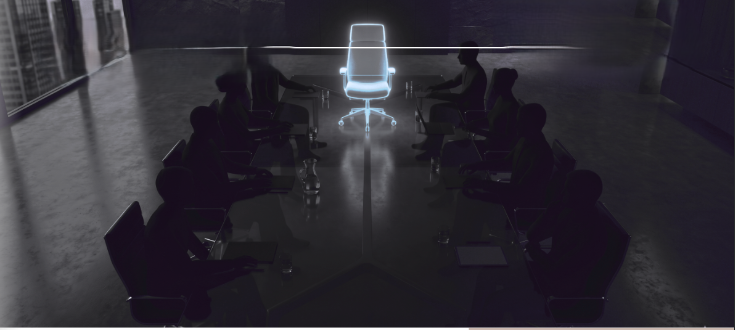
The Undertapped Lever: Why Human Capital Must Sit at the Heart of Every Board
The Asymmetry of Every Age
Few levers move enterprise value more than human capital or are less understood at the board level.
Look back across the history of business and a pattern emerges. In each major era of economic development, competitive advantage tended to concentrate around whatever was hardest to replicate. The organisations that recognised this early, and built their leadership around it, were generally the ones that pulled ahead.
In the age of industrialisation, operational mastery was the differentiator. Those who could scale production and manage supply chains reliably held the edge, and the COO was the indispensable executive.
As capitalism matured, financing strategy moved to the centre of the boardroom. Capital allocation, balance sheet strength, and investor confidence elevated the CFO far beyond the accounting function.
When digitalisation arrived, technology became the battleground - the CTO and CIO found themselves shaping strategy in ways their predecessors rarely had beyond the IT function.
Each shift elevated a different function. Each one rewarded organisation that understood the change before their competitors did.
Now consider the current moment. Technology is no longer the scarce resource. Any organisation with reasonable means can access AI capabilities and data platforms that would have seemed extraordinary a decade ago. The tools have broadly democratised. What has not democratised is the capacity to use them well: to move with speed, make sound decisions under uncertainty, and build cultures where people bring their full capability to work.
AI can surface opportunities, model scenarios, and suggest interventions with a speed and scale no human team can match. What it cannot do is make things happen. It cannot build conviction, navigate resistance, or drive change through an organisation. That remains irreducibly human, and the organisations that govern this well, that invest in people's capacity to translate insight into action, are the ones that will compound their advantage over the next decade.
The tools are table stakes.
The gap that separates organisations that move from those that stall is not technology. It is the human capacity to turn possibility into progress.
A Structural Problem, Not a Knowledge Gap
Ask any board member about their organisation's most important asset and the answer is rarely in doubt. The language of talent, culture, and capability fills every annual report and every investor day presentation.
Then look at how board governance is actually structured.
In most organisations, human capital reaches the board through one of two narrow channels. The nomination committee focuses on CEO succession and senior leadership pipeline. The remuneration committee governs executive compensation. Both serve important functions. But neither was built to govern workforce capability, culture risk, skills obsolescence, or leadership bench depth below the C-suite. These topics sit in a governance gap and largely remain in management's hands, reaching the board reactively rather than as a standing governance priority.
Conference Board data shows that in 2024, 62% of S&P 500 boards and roughly 75% of Russell 3000 boards disclosed no director with HR or human capital expertise. Meanwhile, board recruitment patterns remain heavily skewed toward traditional profiles. According to Spencer Stuart’s 2025 U.S. Board Index, 30% of incoming directors are former CEOs and 29% have financial backgrounds, with human capital expertise - while gradually increasing, remaining a distant third.
When the compensation committee, populated largely by finance and general management backgrounds, is handed the expanding mandate of human capital governance, the outcome is understandable but limiting. It governs what it knows: pay structures, executive incentives, succession at the top. The board-level questions that matter most for competitive sustainability, whether approved strategies are executable given the organisation's current and future workforce capability, and whether culture is functioning as a strategic asset or accumulating as an enterprise risk, tend not to surface with the rigour the business needs. This is not a reflection on the individuals involved. It is a structural observation: the governance architecture for human capital has not kept pace with what effective boards require.
62% of S&P 500 board directors carry no disclosed HR or human capital expertise. In the broader Russell 3000, that rises to 74%.
What Is Actually at Stake
The materiality case for board-level oversight becomes clear when you look at what is currently sitting outside formal governance.
Gallup's 2025 State of the Global Workplace report documented that global employee engagement fell from 23% to 21% in 2024, the second decline in twelve years, costing the world economy an estimated $438 billion in lost productivity. At the level of individual organisations, McKinsey research found that disengagement and attrition costs a median-size S&P 500 company between US$228 million and US$355 million annually in lost value, including productivity losses and attrition costs. These figures do not appear on any balance sheet. They are deductions from enterprise value that most boards are not measuring, not discussing, and not accountable for.
The talent pipeline picture compounds this. The World Economic Forum’s Future of Jobs Report 2025, based on data from over 1,000 companies representing more than 14 million workers globally, finds that 63% of employers identify skills gaps as the single biggest barrier to business transformation. The report further projects that by 2030, approximately 39% of current workforce skills will be transformed or become outdated. In practice, an organisation’s ability to execute its board‑approved strategy over the next five years increasingly hinges on whether this skills risk is being actively managed today. In many governance frameworks, however, skills remain treated as an HR issue rather than a core strategic or enterprise risk.
The stakes extend beyond execution. Boards routinely approve innovation strategies, digital investments, and transformation roadmaps. The harder question is whether they sufficiently test the human conditions required to deliver them: leadership capacity, critical skills, incentives, and culture. Innovation may be enabled by technology, but it is delivered through people. For boards, the governance question is whether management has the leadership capacity, skills, incentives, and culture required to turn innovation ambition into enterprise value.
What Good Governance of Human Capital Looks Like
The boards getting this right do not simply add human capital slides to the remuneration committee pack. They restructure how the function is governed.
Board composition is the starting point. The NACD’s 2024 Board Trends and Priorities Survey shows that a clear majority of directors view improved human capital oversight as an important or very important board priority. Yet Deloitte’s global board research finds that only 36% of directors believe their board’s discussions are sufficient to fully address the talent agenda. The intent is clearly there. The board‑level capability to act on it is still catching up, and that gap has consequences.
Direct CHRO access to the board matters because workforce risk is strategy risk. When human capital insight is filtered only through management updates or appended to a committee agenda, the board may not get a clear view of whether the organisation has the leadership, capability, capacity, and culture to execute the strategy it has approved.
The CHRO should help the board test that risk with evidence: succession depth for critical roles, readiness of priority skills, internal mobility, workforce capacity, culture indicators, and key-person dependency. These measures go beyond headcount and attrition. They help the board assess whether management is building the organisation required for future performance.
The central board question is simple: has management built, or is it building, the workforce required to deliver the strategy?
The Decade Belongs to Those Who Act Now
I have spent close to two decades working at the intersection of people strategy and business performance. What has changed is not the importance of human capital. That was always true. What has changed is the cost of getting it wrong.
Boards are under constant pressure to deliver returns, manage cost, and respond quickly to market shifts. Yet when human capital is viewed mainly through the lens of cost, compensation, and near-term efficiency, organisations risk strengthening the next quarter while weakening the next decade.
AI brings this into sharper focus. It will change work, reduce some roles, create others, and reshape the skills organisations need. Companies must pursue productivity. The question is whether they do so with foresight: redesigning work, renewing skills, redeploying people where possible, and handling difficult decisions with fairness.
If AI-led transformation results in waves of poorly managed layoffs, the risk will not stop at the company boundary. When too many people lose access to meaningful work, income, and opportunity, household confidence weakens, demand falls, and the markets businesses depend on begin to contract. Companies will feel the consequences too: fewer customers, softer revenues, weaker employer trust, loss of institutional knowledge, and reduced capacity to grow when conditions change. What looks efficient in one organisation can become fragile when repeated across an economy.
This is where HR brings a necessary balance to the boardroom. The CHRO can help boards see the full human and economic implications of workforce decisions, not to slow progress, but to make progress responsible, durable, and worthy of trust.
The organisations that win the next decade will not be those that treat people as the cost of transformation. They will be the ones that build capability, protect dignity, and use technology to expand what people and businesses can achieve together.
Few levers will matter more in the next decade than human capital. The boards that understand this, and govern it with the same rigour they bring to financial performance, risk, and technology, will be better placed to build the leadership, capability, and enterprise value that lasts.
List of Comments
Leave a Comment