
View Interview
 Interview
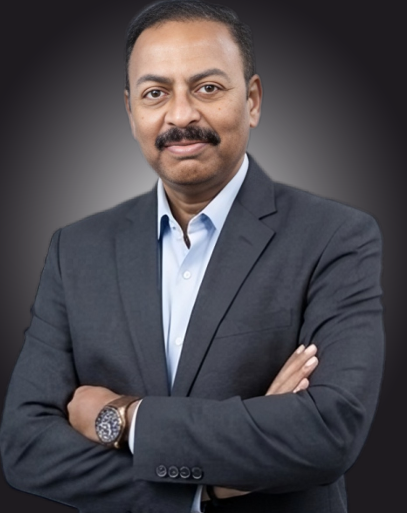
Amit is a Global Thought Leader & HR Visionary with a career spanning 37+ years, shaping future-ready A organizations across diverse industries through leadership transforma on, cultural coherence, agile workforce capability, and tech-enabled people architecture. Over the years, he has held leadership roles with marquee organizations including Tata Motors, CESC Ltd, Britannia Industries, Vodafone, RPG Group and Reliance Group, bringing deep expertise in building scalable people systems and resilient performance cultures. He currently holds the position of Director & CHRO, Benne Coleman & Company Ltd (The Times of India), India’s largest media conglomerate with multiple power brands across print & publishing like The Times of India, The Economic Times, Navbharat Times, Maharashtra Times to name a few.
He is also a Director & Board Member in Metropolitan Media Company Ltd. (MMCL), the media house of Vijay Karnataka & Bangalore Mirror.
Amit is a trusted strategic partner and credible advisor to shareholders, promoters, and business leaders, known for enabling human-capital-led enterprise value creation and leading organization-wide transformation during pivotal phases of innovation-led growth and transition. He is an Engineering & Management graduate, an alumnus of the Kellogg School of Management, and PhD from KIIT School of Management.
Amit is an active member of multiple Think Tanks with Central & State Government bodies, contributing to national skill building and steering India’s evolving talent, skills, and workforce agenda, including participate on in key initiatives and platforms, spanning both economic and social dimensions of workforce development and reflecting a deep commitment to aligning economic growth with employability, inclusion, and long-term workforce resilience.
What the years revealed is that the real currency of leadership is not authority, but trust. And trust is not granted by a title; it is earned through curiosity, through the willingness to say 'I don't have all the answers,' and through the genuine act of listening before leading. I have written about this quite candidly that vulnerability in a leader is not weakness; it is the most sophisticated strength a leader can carry.
The second unlearning is around hierarchy. Today's workforce, particularly the younger generations, does not respond to positional authority alone, they respond to authenticity, purpose, and empowerment. The role of a leader has evolved from being a commander to becoming an orchestrator of talent, ideas, and energy.
And the third is around stability. Earlier, organisations optimised for efficiency and predictability. Today, adaptability and learning agility matter far more. The organisations that thrive are those comfortable continuously reinventing themselves.
So, the short version: I had to unlearn hierarchy and relearn connection. I had to unlearn certainty and relearn curiosity. I had to unlearn stability and relearn reinvention. Those three shifts, more than any strategy or program, have defined my evolution.
The next decade will be won by organisations that build anti-fragile cultures, organisations that become stronger through disruption rather than weakened by it. In media specifically, the question is no longer whether digital transformation will happen. It already has. The question is whether your human capital is a lagging variable or a leading edge in that transformation.
I see three differentiators that will matter decisively. The first is capability velocity - how quickly an organisation can learn, reskill, and redeploy talent. The second is leadership adaptability - leaders who can combine data, technology, empathy, and judgment simultaneously. The third is cultural agility - organisations where collaboration, experimentation, and fungibility become embedded ways of working.
There is also a fourth, less visible separator: the integrity of trust, internal and external. In a world flooded with synthetic content and fragmented attention, organisations with depth of credibility, editorial integrity, and authentic human connection will command a premium that no algorithm can replicate. The future belongs to enterprises that can continuously reinvent themselves without losing their core identity.
Three aspects have become central to how I lead. The first is communication. In uncertain environments, silence creates anxiety. Transparent, frequent, and honest communication is the cheapest investment a leader can make in organisational trust. The second is empathy with accountability. Being people-centric does not mean lowering performance standards. It means creating the conditions where people can perform sustainably. The third is adaptability. Leaders today must be comfortable operating without complete information. Agility in decision-making has become more important than perfection.
I describe this evolved posture as 'connected leadership' operating at the intersection of cognitive flexibility, empathy, digital dexterity, and a frugal innovation mindset of doing more, doing better, with less.
At The Times of India, we increasingly look at capabilities through a future-back lens. We ask ourselves: what capabilities will become mission-critical three to five years from now, and how do we begin building them today? I am always a part of the business planning conversation. If we are moving into digital video, the capability investment must happen eighteen months before the business need crystallises, not six months after.
Capabilities today are no longer purely role-based; they are becoming transferable and fungible. We are therefore focusing on building broader capability clusters, digital fluency, AI understanding, problem-solving, adaptability, and learning agility. The most durable capability investment is not upskilling people in a specific tool, it is building cognitive agility and transferable skills that allow talent to pivot across functions, formats, and business models.
The second shift is from episodic learning to continuous learning ecosystems. It must be embedded into the flow of work. The most powerful learning interventions we have deployed are project-based, cross-functional, and oriented around real problems.
Finally, capability architecture in the age of AI must integrate technology with humanity. AI can accelerate productivity exponentially, but creativity, judgment, empathy, and ethical reasoning remain deeply human differentiators.
The Times of India is a rich, complex mosaic of businesses and brands. Within that diversity sits a multi-generational workforce — Baby Boomers, Gen X, Millennials, and Gen Z. Each cohort has different expectations, motivators, and definitions of a great work experience.
What truly creates a differentiated employee experience is leadership behaviour and managerial quality. Employees remember how leaders made them feel during the moments that mattered — career discussions, transitions, crises, recognition, or failures.
In practice, this has meant nuanced total rewards design. Moving away from uniform packages to flexible, life-stage, sensitive benefit architectures. Building learning pathways that allow individuals to co-create their development journeys rather than consume prescribed programmes.
The first discipline is deliberate intellectual curiosity. I read widely and across disciplines including business, technology, geopolitics, behavioural science, AI, philosophy, consumer trends.
The second is engaging actively with younger talent. Interacting with younger generations gives leaders a very realistic understanding of how aspirations, expectations, and mindsets are evolving and it is humbling in the most productive way.
The third is engaging with peers across geographies and industries. My involvement with platforms like INMA, my role in the CII B20 Taskforce on the Future of Work under India's G20 Presidency, my membership in the Government of India's Capacity Building Commission — these are living laboratories for understanding where the world of work is heading, from multiple vantage points simultaneously.
And finally, reflection. Leadership growth does not come only from experience; it comes from reflecting meaningfully on experience. The day a leader believes they already know enough is the day they begin losing relevance.
Three shifts will surprise many of today's leaders. The first is that workforce boundaries will become fluid. Organisations will increasingly manage blended ecosystems of full-time employees, gig talent, AI agents, and external capability networks. The agility required to orchestrate that ecosystem is fundamentally different from anything the HR function was originally designed for.
The second is that the CHRO will become deeply technology integrated. Understanding AI, data, workforce analytics, and automation will no longer be peripheral to the role, instead it will be the core.
The third is that organisational health will become a measurable business metric on par with financial metrics. Culture, trust, adaptability, and employee energy will be seen, valued, and reported as direct drivers of enterprise value.
Put simply, the CHRO role will become significantly more strategic, predictive, and enterprise-centric than it has ever been.
The capability bet I would place is on learning agility combined with AI fluency, anchored by human judgment. Technologies will continue to evolve, and any specific tool we invest in today will be obsolete by the end of the decade. But organisations that build a deep learning orientation, combined with the distinctly human capabilities of editorial wisdom, contextual intelligence, empathetic storytelling, and ethical reasoning, will consistently outperform. These are not automatable. They are, in fact, the moats that will define which organisations endure.
And the organisational redesign I would champion is the shift from rigid hierarchical structures to agile, networked, less hierarchical ecosystems — what I describe as moving from a pyramid to a lattice. The pyramid optimises for control and efficiency. The lattice optimises for agility, cross-functional collaboration, and speed of learning. The future organisation will not operate through silos; it will operate through collaborative ecosystems.
Taken together: a leader who grows people, a capability bet on irreplaceable human judgment, and a structure that lets talent flow. That is my formula for winning the next decade. Ultimately, winning will depend on how effectively organisations combine technology, talent, and trust, because in the age of AI, human capability will not become less important. It will become even more valuable.