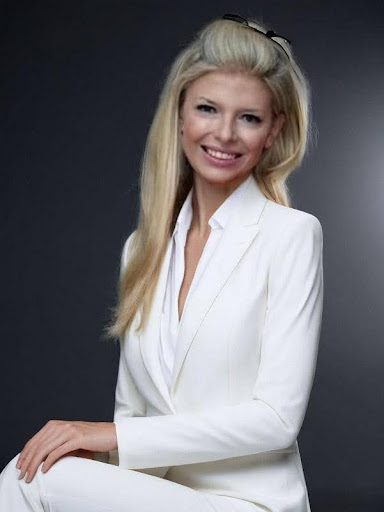
Q:Many organisations celebrate women for breaking barriers, yet far fewer invest in redesigning the systems that created those barriers. Where does leadership thinking fall short—and why do these systems remain so resistant to change?
A:The most insidious systems by far are informal succession pipelines and uncodified, vague promotion criteria. Research shows women receive 20% more developmental feedback but 30% less sponsorship for stretch roles. In other emerging markets where I've worked, this is compounded by systems that privilege "safe" succession choices. Mature markets in the West aren't immune - women are 1.5x more likely to be in individual contributor roles at the director level than men. The pattern I see consistently is when organisations optimise for the ever-ephemeral “fit" in senior hires, which becomes code for homogeneity.
Q:Having operated at the intersection of HR, strategy, and learning at senior levels, which power structures do you see most quietly—yet consistently—limiting women’s advancement today?
A:I wonder if we're recreating old patterns in new contexts. Women hold 12% of AI leadership roles globally (WEF, 2024) despite being 50% more likely to be displaced by automation in administrative functions. In workforce planning, I see organisations guiding women on "adapting" to hybrid work rather than involving them in redesigning performance metrics away from presenteeism. Until we structurally decouple contribution from office time and linear career paths, we're just perpetuating existing hierarchies.
Q:As future skills and workforce agendas evolve, how can organisations ensure that women are not merely adapting to the future of work, but actively shaping the systems that define it?
A:The data points to reciprocal obligation networks and structural loyalty. Unsurprisingly, women face 35% higher social penalties for self-promotion than men. “Cheerlead for yourself, but don’t” is the perplexing guidance. I've observed this acutely in both mature markets and GCC contexts where relationship capital is everything. When voice threatens belonging in tight networks, silence becomes rational. We see few leaders willing to push against homosocial reproduction where senior teams co-opt those who won't disrupt established norms. Political consequences aren't separate from systemic factors; they're how systems enforce themselves.
Q:At senior leadership levels, silence often functions as a form of power. In your experience, what most silences women—fear, loyalty, political consequence, or something more systemic?
A:The tipping point for me, sadly, is when resilience becomes an individual attribute rather than an organisational design failure. Women receive 2.5x more "resilience" and "adaptability" feedback than men, while men receive more "strategic" and "visionary" coding. This shifts accountability. If success requires extraordinary personal resilience, we've normalised hostile systems. We are celebrating women who "navigate cultural complexity," which obscures the structural exclusions requiring navigation. Treating symptoms (resilience training) prevents addressing causes (promotion bias, unequal care burdens). We should be measuring organisational resilience - the system's capacity to celebrate, nurture and retain talented women - not individual resilience to organisational dysfunction. We also rarely surface the fact that females disproportionally suffer from autoimmune conditions, often tightly correlated with workplace female-health-illiteracy.
Q:Resilience is frequently framed as a defining strength for women. At what point does this narrative risk normalising persistent struggle rather than addressing the systemic causes behind it?
A:The data on "token" dynamics is clear: when you're <15% of a group, you carry representational burden whether you choose it or not. This is simply yet more unseen female labour. I'm sceptical of simplistic visibility narratives because they create a double bind and attempt to homogenise women. Female representation modelling is heavier where women leaders are fewer. The framing I find more honest is that visibility isn't optional at senior levels, but organisations should compensate for that hidden work, such as ERG leadership, and distribute it, not default to the same few faces. Authenticity requires systemic permission to be complex, not exceptional, when the progression pathways are uneven.
Q:With growing expectations for women leaders to serve as role models, how do you navigate the tension between the responsibility of visibility and the freedom to lead authentically—without carrying the disproportionate weight of representation?
A:This is a huge systemic issue, and the whole model needs shredding and redesigning. Women shouldn't bear disproportionate representation weight while men lead freely.
How I navigate it: I remember my privilege. I can say no, and it’s a complete sentence. I try to choose what visibility serves me, not what appeases others. I'm radically open about equity. I call out when I witness others being tokenised or asked to perform "inspirational woman leader" theatre. I need to get better at doing this for myself.
It is disappointing that a systemic issue has been reduced to an individual burden. Rather than women learning to carry impossible loads more gracefully, I hope we soon see a future of all genders dismantling inequity, for women, friends, and sisters everywhere.

 Hot Seat