View Interview

Interview

Lior Arussy
Lior Arussy
Co-Founder & Chairman, Lorige

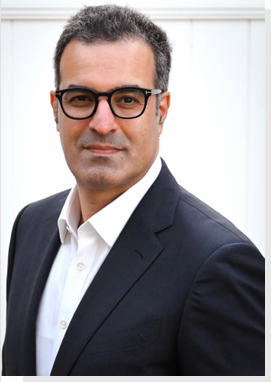
One of the world’s leading authorities on customer experience, transformation and change, Lior Arussy is an experienced change practitioner, success accelerator, corporate culture expert, and founder of design and transformation firm Strativity Group. Called “a triple threat of transformation” by co-founder and founding editor of Fast Company William Taylor, Arussy is a unique, critical, global voice helping people worldwide achieve ultimate success.

Arussy has been involved in over 250 global transformations with some of the world's top brands including Mercedes-Benz, Delta Airlines, Royal Caribbean Cruises, BMW, Cadillac, Novo Nordisk, MasterCard, The Met, Thomson Reuters, HSBC, E.ON, FedEx, SAP, University of Pennsylvaniaand Johnson & Johnson, among others, 

Recipient of several awards, Arussy is an award winning author of ten books including Dare to Author! (2024) Next is Now: 5 Steps for Embracing Change – Building a Business that Thrives into the Future (May 2018, Simon & Schuster), Exceptionalize it! (2015) and Customer Experience Strategy (2010)  Arussy has written over 400 articles for publications around the world, including the Harvard Business Review, and multitude of magazines and was interviewed by MSNBC, CNBC, Bloomberg TV, the Wall Street Journal, Fast Company, CRM Magazine, Smart CEO Magazine, and Inc. magazine

Q:Leadership agility is often described as the ability to adapt — but in your experience, what distinguishes adaptive leaders from truly transformative ones?
A:It is common to confuse the adaptive leader and the transformative leader. In reality, they are very different in purpose, actions and results. The adaptive leader act within an existing framework and simply ensure that the actions respond to the evolving changes. The transformative leader on the other side, does not respond to evolving changes, he creates new realities. The adaptive leader ensure that they stay relevant within the current opportunities and strategy. The transformative leader, on the other hand, creates new opportunities through different strategies. They both may read the same trends, but their responses will be radically different. The adaptive leader will tweak the strategy and actions; the transformative will start a whole new movement altogether.
Q:You’ve worked with organizations navigating transformation at scale — what are the most common blind spots leaders encounter when trying to build agility into their culture?
A:In a 2017 study that we did with Harvard Business Review we benchmarked 422 companies. Only 9% reported success in their change initiative. It is a scary result if you realize that these failures represent significant risks for the organization’s future survival. Some of the common blind spots which were also identified in the study are:

oTop-down leadership – Senior executives believe that they can order the change rather than engage their employees in the process
oPoor communication – transformations that are launched with instructions but lack the “why?” And the rationale behind them
oProcess rigidity – refusal to change processes and programs to support the transformation
oTechnology first approach – thinking that technology is the goal and not the human behaviour that supposed to leverage it.
o“We are different” attitude – the belief that the business is so different it can not really adapt to the new trends.
o“Doing it already” conviction – the belief that the transformative change is already embedded in the current behaviour
oLack of specification – the inability to break down the requested transformative performance to specific actions and behaviours.
Q:In your view, what role does trust play in enabling agile teams and cultures?
A:There are two types of trusts. The first type is trust that you will deliver on your promises. The second one is the trust that we will walk together in journey that will be built as we walk on it. They are very different. The first type does not have too many unknowns. The specification is clear, and the only questions are would you do it on time and as requested. The second type requires a great deal of acceptance of the unknown on the journey. In agile, transformative journeys, it is the second type of trust that is crucial to success because the specifications are a work in progress. That is the kind of trust that most companies did not develop as a form of competence. Without it, they remain stuck and cannot fully execute their planned transformation.
Q:• You describe yourself as a creative catalyst. How do you cultivate creativity and curiosity in leaders who’ve been conditioned for control and certainty?
A:You are correct that leaders crave control and certainty. It is their most natural toolbox. Most of all, however, they are results oriented. The control and certainty are tools to achieve results. Unlike others, I do not approach creativity and curiosity as an objective on its own. I treat them as tools to achieve goals. Innovation is not an objective, it is a vehicle to develop future products that will allow the organization to be competitive, relevant to customers and profitable. By focusing on revenues, growth and profitability which are shared goals by the executives, I can offer new tools of curiosity, creativity and innovation to pursue better results.
Q:• Can you share a personal moment when you had to reinvent your leadership approach — what triggered it, and what did you learn from that experience?
A:In the early days of my career, clients wanted me to provide them with the answers. And that was the classic consulting model. They ask, we answer. The problem with the model was the execution. When you own the answers, the executives do not have any sense of outcome ownership and therefore little incentive to execute it. I changed the leadership style, and I focus on asking the questions and working on excavating the answers from the organization and its executives.They create their own answers with my guidance. I stretch their thinking, challenge their initial answers,but ultimately the outcome is their idea and creation. In this model, they are highly motivated to execute and create the change.
The lesson is very clear. Ownership is key and co creation is the way to obtain engagement and commitment. It may take longer to do it than just hand them the answers. But the long-term impact is far greater.
Q:Finally, if you could rewrite one leadership rule for the next decade, what would it be — and why?
A:Leadership is not about knowing where we are going and the path to get there. Leadership is about creating a higher purpose people are willing to volunteer for. Today’s employees are very resourceful and information and readily available. The days that the leader owned a superior knowledge that granted the leader the right to tell employees what to do are gone. Knowledge transparency and generative AI empower employees in ways unimaginable just a few years ago. They do not need the knowledge. They seek the motivation.

Exceptional performance comes from employees who volunteer for their cause and are not just working at a company. Leaders are people who create a cause and inspire people to pursue it. Leaders ought to evolve their engagement to focus on the “why?” that is the root of all actions. Become the purpose provider leader, and your employees will surprise you with how far they can go and the path they will chart to get there. I have seen these many times. The best comment I received from a CEO was “I didn’t know my employees can perform to that level.”