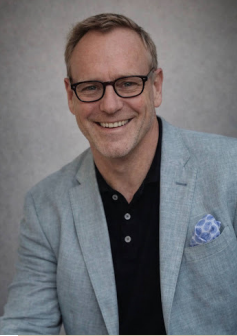
Q:As a fractional Chief People Officer, how do you embed impactful people strategies within organizations at different stages of growth?
A:The first thing I do is resist the urge to import a framework from my last engagement. Every business is at a different stage — different talent maturity, different leadership bandwidth, different proximity to a liquidity event. What I look for is the gap between the people infrastructure that exists and the one the growth plan requires. I call this Capability Architecture — designing the systems, role clarity, and talent diagnostics that make growth executable, not aspirational. At Asurion I joined as employee three and built that infrastructure from zero as the business scaled to $210M revenue and 1,100 people across seven countries. At Readdle I stepped into 450 people across 31 countries and moved fast without breaking what worked. The fractional model accelerates this: I bring outside pattern recognition without the institutional bias that accumulates inside a business. Reading a room and prioritising ruthlessly are the skills that matter.
Q:With your global experience, how do you ensure consistency in culture while respecting regional diversity?
A:I've operated across the US, Europe, Asia, the Middle East, and Africa — and the mistake I see repeatedly is conflating culture with process. Process must be consistent: how we set goals, calibrate performance, give feedback. Culture is the meaning people make of those processes — shaped by context, history, and local norms. At Rakuten I was accountable for 2,000+ people across multiple regions. We moved the diversity ratio from 25% to 42% globally, but what that looked like in Tokyo was entirely different to London. At Liquid Telecom I led People Operations across 13 African operating companies — frameworks shared, expression entirely local. My approach anchors consistency around behaviours and outcomes, not rituals. What does accountability mean here? What does good leadership look like in this context? Those questions get answered locally within a shared framework. Coherence without uniformity is the only version that holds at scale.
Q:Your experience spans founder-led, PE-backed, and PLC organizations — how do you tailor HR strategy to meet the distinct expectations of each environment?
A:These environments have fundamentally different relationships with time. At Readdle, founder-led, the founder was the culture — my job was to institutionalise what worked before scale broke it. At Astound Commerce, PE-backed and growing at pace, every people decision was evaluated against EBITDA impact and delivery velocity. At Tullow Oil, a listed PLC across 15 countries, I led a 28% headcount reduction delivering $250M in cost savings — governance and board communication were as critical as the people work. In each case I apply the same diagnostics: whether individuals Get It, Want It, and have the Capacity to do it; and whether the organisation is Skilled, Aligned, and Motivated to execute at scale. These frameworks provide rigour and a common language across very different stakeholder environments. What changes completely is the sequencing, the pace, and how value is defined. The framework stays constant. Context determines everything else.
Q:You are recognised for linking people strategy with commercial outcomes — how do you ensure HR directly contributes to EBITDA growth and enterprise value?
A:When I join a business, I ask to see the value creation plan before I look at the org chart. The People function's job is to close the gap between the talent the business has and the talent it needs — visible and closeable on a timeline investors can hold. At Asurion I joined when EBITDA was minus $30M; by exit circa positive $17M, built on people infrastructure designed for rapid multi-country scale. At Appodeal I moved eNPS from 6 to 27 and reduced time-to-hire from 60 to 32 days in two quarters — both with direct revenue implications. At bwin.party I led the people workstream on a £1.5BN transaction. The credibility comes from one discipline: treating people metrics as business metrics. eNPS is not a culture score — it's a leading indicator of whether your EBITDA assumptions are at risk. Bench strength is a valuation conversation.
Q:With extensive experience in HR tech stack implementation, how do you evaluate and integrate technology while maintaining a strong human-centric focus?
A:The question I always ask before selecting any tool: what decision does this improve? Not what data does it generate — what decision. Most HR tech implementations fail because they automate activity rather than intelligence. I've implemented Workday at Asurion, Greenhouse and Lattice at Readdle, and partnered with Engineering and Data Science at Appodeal to build ML-enabled solutions across hiring quality and performance insights — each chosen because it sharpened a specific leadership decision. At Rakuten we introduced AI-driven sentiment analysis to measure cultural performance as a board-level business metric. At Astound Commerce the integrated tech stack supported an eNPS of 58 across 1,500 people in 13 cities. The human-centric principle is constant throughout: technology should make leaders faster and more accurate, not replace their judgement. The tool serves the decision. That discipline is what prevents a tech stack from becoming a graveyard of expensive, underused platforms.
Q:Looking ahead, how do you see the role of People Operations evolving in shaping resilient, high-performing, and future-ready organisations?
A:AI is about to do to HR what it did to finance — transform it from a retrospective reporting function into a forward-looking intelligence function. Finance used to close the books. Now it models scenarios, forecasts risk, and gives boards a live view of the business. HR is still mostly closing the books. The People functions that define the next decade will operate as Capability Architects: building the diagnostics and intelligence that turn talent decisions into measurable competitive advantage. At Rakuten I introduced a Cultural Performance Score to measure the ROI of culture as a board metric — not an engagement initiative. At Appodeal we moved survey participation from 26% to 76% and built AI-driven people tools with Engineering. These were early warning systems, not pulse surveys. Organisations that build predictive people infrastructure now will have stronger pipelines, lower attrition, and leadership teams that can execute the plan.

 Hot Seat