
View Interview
 Interview
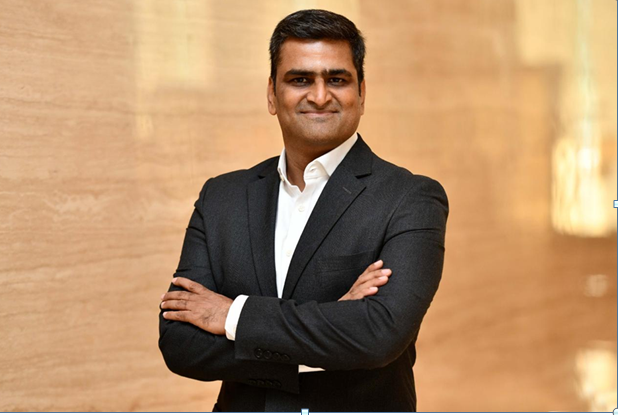
Ramakrishna (RK) currently serves as the Head of Human Resources at HomeFirst, one of the fastest-growing housing finance companies in the country. With over two decades of rich experience in human resources, he has built deep expertise in areas such as rewards and recognition, compensation and benefits, HR technology, and people strategy. In his current role, RK is focused on shaping a culture that not only drives business growth but also positions HomeFirst as an employer of choice for emerging talent. His work reflects a balance of business outcomes and human aspirations — ensuring that as the company grows, its people grow alongside it.
Before joining HomeFirst, RK held leadership roles with IDFC (now IDFC First Bank), where he served as Senior Director. At IDFC, he played a pivotal role in designing and executing compensation, benefits, and reward strategies, strengthening HR operations, and embedding technology solutions to enhance employee experience. He was also closely involved in the establishment of IDFC Bank and later contributed to the integration during its merger with Capital First, a milestone in the Indian financial services sector.
Earlier in his career, RK headed HR for the Power Transmission business at Sterlite Technologies, overseeing operations across units in Silvassa and Haridwar. He began his professional journey with Vedanta Resources at the Hindustan Zinc Plant in Udaipur, where he developed a strong foundation in people practices within a challenging and dynamic business environment.
Across these roles, RK has remained committed to building organizations where people feel valued, supported, and motivated to bring their best selves to work. He is known for combining strategic vision with a practical approach to execution, while staying grounded in the belief that culture and people form the true differentiators of any successful business.
Traditionally we used HR dashboards to track attrition, vacancies and hiring numbers. But these don’t tell leaders what really matters: What part of the strategy breaks if certain people walk out? In today’s knowledge- and relationship-driven businesses, a small number of roles often carry a disproportionate share of revenue, regulatory responsibility or client trust. People analytics must therefore connect individual employees to business outcomes and calculate risk in commercial terms.
So we have started tracking the combination of Attrition, Average tenure & loss of experience as a 3 dimensional metric across each of our regions. This helps us find the areas of focus not just by attrition but on an overall basis.
The second insight is Workforce Productivity ROI — how effectively the organisation is converting salary and effort into business results.
CEOs no longer want to know whether employees are “engaged.” They want to know whether people investments are producing the outcomes the business needs: faster sales cycles, lower risk, better customer experience, or quicker innovation. This requires measuring time-to-productivity, performance spread, and the financial cost of capability gaps.
So we have started tracking time to productivity by source of hire. Enables us to quickly orient towards better sourcing models. If you intersperse this with the earlier metric, you will have a winning combination of well sourced, engaged and retained employees.
Gen Z grew up with YouTube, Google and real-time feedback. They do not see learning as something that happens in courses — they see it as something that should be available instantly when they are doing the work. In performance management, they want continuous signals about how they are doing and whether they are becoming more valuable.
So we have created a combination of experiential learning modules that are short and crisp in the beginning, and then follow it up with programs that make you learn along with a buddy or senior. This enables employees to get instant learning high and also an ongoing in-depth understanding of the work we do and how it should be done.
What hasn’t changed is the core of human motivation. Gen Z still wants to be treated fairly, to be recognised, to trust their managers, and to see a future in the organisation. What they will not tolerate is opaque, slow or outdated systems that hide opportunities and create unnecessary friction.
So this gave rise to our continuous performance measurement systems that give people a handy view of where they are and how they are progressing. Growth is dependent not just on performance but your willingness to take on larger responsibilities and be flexible to move to newer markets
Most HR systems still describe what has already happened — headcount, turnover, vacancies. A future-ready system instead answers three forward-looking questions: What skills do we have? How easily can people move? And are our hiring and development engines aligned to where the business is going?
While in a constantly changing environment it is difficult to predict what will be the key challenges and hence the skills required to manage them. We have ensured that we constantly benchmark ourselves with the best in the industry on outcomes. This helps us understand if we have the requisite skills to manage and come out triumphant.
In one such instance, we found that hires from certain colleges consistently outperformed others after six months, so we changed our campus hiring strategy — using evidence rather than reputation.
Employee experience is created across multiple touchpoints: recruitment, onboarding, learning, performance, IT, and managers. When each is optimised in isolation, the overall experience becomes confusing and frustrating. What’s missing is leadership accountability for how it all fits together.
So when we design our processes we look for points of failure or points of frustration for employees and try to solve it from there and then deploy technology to improve the speed and efficiency.
When we started out our onboarding involved five different touchpoints for new joiners. They felt lost despite world-class tools. We then consolidated and created a single owner for our entire onboarding journey, time-to-productivity improved within three months — without buying any new software.
Instead of focusing on policies and programs, CHROs will model workforce scenarios the way CFOs model cash flow. They will ask: Which skills will be scarce? Where will automation change roles? How do we build leaders for a hybrid, AI-enabled workplace?
We have started looking at scenarios to simulate: “If 20% of operations are automated, what skills do we need next?” or “If 30% of senior leaders retire or exit, where do successors come from?”
To do this well, CHROs must unlearn the idea that HR is just about people and that culture is soft. Culture determines how fast and how well strategy becomes reality.
This requires distinguishing between what should be fast and what must remain human. Processes like hiring, onboarding and learning access should be automated and rapid. But coaching, feedback, inclusion and leadership judgement must be protected. We have to constantly measure spans of control to ensure that there is effective attention to each member. Else we end up losing the ethos / essence of the earlier organisation.
So when HR uses data to show that growth is becoming unhealthy — and has the courage to say so — it is not slowing the business. It is safeguarding its future.